How to Evaluate an Ulster County Mixed Use Property
June 4, 2026
June 4, 2026
Trying to size up a Main Street mixed-use property in New Paltz can feel a little like solving two deals at once. You are not just evaluating storefront income or apartment rent in isolation. You are judging how a building functions as a business asset, a housing asset, and a legal fit within a walkable village setting. This guide will help you focus on the numbers, approvals, and local context that matter most so you can evaluate opportunities with more confidence. Let’s dive in.
New Paltz is not a generic retail corridor, and that matters when you evaluate mixed-use property. The Village comprehensive plan describes downtown as a regional shopping center made up of smaller, pedestrian-oriented businesses, with residential and commercial uses mixed throughout the Village. That means a Main Street building should be viewed through a walkable, live-work lens rather than a suburban strip-center model.
Local demand also helps shape the income story upstairs. Census data in the research report shows median gross rent benchmarks of $1,672 in the village, $1,616 in the town, and $1,425 countywide, with a countywide median household income of $86,271. Those figures do not set your rent for you, but they do provide a grounded reality check when you are testing apartment income assumptions.
New Paltz is also a relatively small market. The 2024 population estimate was 8,646 for the village and 15,617 for the town, while Ulster County's 2025 estimate was 183,330. In a smaller market, tenant quality, rollover timing, and building-specific appeal can have an outsized impact on value.
Before you get excited about projected income, confirm that the existing or planned use works under local code. In the Village of New Paltz, the Neighborhood Business Residential Mixed-Use District is specifically intended to support a blend of residential, retail, service, professional, civic, and cultural uses. It is designed to encourage walking, bicycling, and transit use, which reinforces the importance of location and building layout.
The Village code is also clear that new construction in this district is generally expected to be multistory and mixed-use. Commercial exterior alterations require Planning Board approval and review by the Historic Preservation Commission. In addition, all uses, including accessory uses, need an approved site plan unless they fall within narrow exceptions.
In the Town of New Paltz, the Main Street Mixed Use District was created to extend the Village's walkable Main Street character and reduce auto-oriented strip development. The district requires at least two occupiable stories, allows a maximum of three stories and 35 feet for principal buildings, and sets minimum lot area and frontage standards of 7,500 square feet and 75 feet. Parking is preferred behind buildings instead of in front, which can affect how you assess functionality and redevelopment potential.
For process, the Village Building Department handles permits, inspections, and code compliance, while the Planning Board reviews site plans, special use permits, subdivisions, and lot improvements. Ulster County Planning also notes that some local land-use actions may require General Municipal Law 239 referral review when regional impacts are involved.
For a small mixed-use property, the rent roll is your starting point. The research report notes that lenders and reviewers look closely at tenant strength, tenant rollover risk, anticipated rents, lease terms, the probability of renewals, and current and projected vacancy and absorption. In plain terms, you are not just asking what rent is collected today. You are asking how durable that income really is.
A fully occupied building can still be risky if one retail tenant drives most of the income and their lease expires soon. On the other hand, a building with one near-term vacancy may still be attractive if the lease-up case is realistic and the upstairs units are performing near local market levels. Stable value usually comes from durable first-floor tenancy paired with believable apartment income.
If the property has commercial space, pay extra attention to re-leasing assumptions. The research report notes that re-leasing costs can be estimated by studying the rent roll and renewal probability. That means your underwriting should account for the real cost of turnover, not just the hope of replacing a tenant quickly.
Mixed-use properties often look stronger on paper when reimbursements and one-time costs are not separated correctly. The research report explains that retail leases commonly push expenses such as common area maintenance, landscaping, refuse collection, taxes, insurance, and parking-lot lighting to tenants. That is useful, but only if the lease language truly supports those pass-throughs.
Landlord-side underwriting should also include management and leasing costs where appropriate. The report cites management fees of about 3% to 5% of effective gross income, along with leasing commissions of about 4% on new leases and 2% on renewals. Those line items matter because they affect your true net income, especially when a tenant turns over.
When buyers blur these categories together, value can look better than reality. In a Main Street building, clean underwriting usually wins over aggressive projections.
A good mixed-use asset has to work in real life. The research report identifies traffic volume, site configuration, ingress and egress, parking, surrounding residential density, and tenant mix as major retail success factors. In New Paltz, those factors line up closely with local planning goals around street-facing buildings, pedestrian movement, and rear parking.
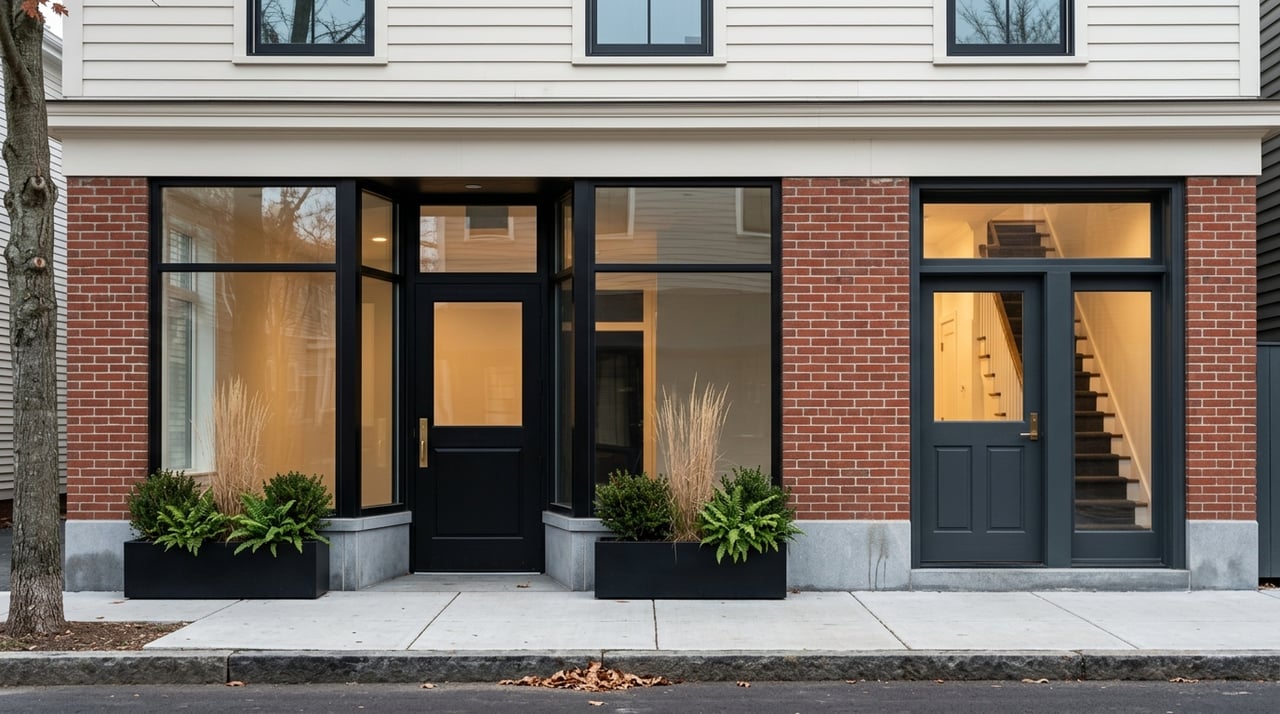
That means the best-performing buildings are often the ones that fit the corridor naturally. A visible storefront, sensible access, and apartments that feel connected to the walkable downtown setting can support stronger long-term performance than a building that technically produces income but functions awkwardly.
Parking deserves special attention. In the Village, on-street parking along the frontage can count toward parking requirements, and the Planning Board may reduce parking where uses share demand. The code specifically allows shared parking logic for combinations such as residential plus retail or office, which can help smaller properties work better than you might expect at first glance.
In the Town district, parking reductions may also be available when mixed uses are competing or noncompeting, and off-site parking can count if it is within 500 feet and backed by a binding agreement. That makes the parking plan a legal and financial issue, not just a convenience issue.
Financing for mixed-use property can depend heavily on occupancy and building use. The research report notes that SBA-backed financing may be relevant when a buyer plans to occupy part of the building or is buying a business along with the real estate. SBA 7(a) can be used to acquire, refinance, or improve real estate and buildings, while SBA 504 offers long-term fixed-rate financing for major fixed assets such as existing buildings and certain improvements.
Occupancy rules are important here. For acquisition or renovation of an existing building, the applicant or operating company must occupy at least 51% of the rentable property. For new construction or short-term construction refinance, permanent occupancy must be at least 60%, and long-term leasing is limited to no more than 20% of rentable property.
The report also notes that 504 funds cannot be used for speculative rental real estate. So if your plan is strictly investment-focused, that financing path may not fit. The right loan structure often depends on whether you are an investor, an owner-operator, or both.
A well-bought mixed-use property usually starts with disciplined document review. According to the research report, a strong lender or buyer file often includes financial statements, operating statements, rent rolls, title insurance, mortgage or deed documents, lease assignments, security agreements, copies of leases and estoppels, and an appraisal or evaluation. If any of that is missing, your risk goes up.
Appraisal logic matters too. The research report notes that mixed-use appraisal guidance calls for confirmation that the use is legal under local zoning, a description of the mixed-use characteristics, and analysis of whether the commercial component harms marketability. Even if you are not buying an owner-occupied asset, that is a useful reminder that financing and resale can be affected by how the commercial use is perceived.
For some parcels, floodplain status should be checked early. The research report notes that in low-lying corridors, the Town's floodplain district can subject development to state building code and NFIP standards. That is the sort of issue you want to identify before pricing a renovation or relying on a future expansion plan.
In New Paltz and across Ulster County, the most compelling mixed-use opportunities usually share a few traits. The first-floor commercial space has a use case that fits the corridor and lease terms that are understandable and durable. The upstairs apartments are supported by realistic local rent levels instead of speculative upside.
The parking story works with local code rather than against it. The approvals path is reasonably clear, and there are no major surprises around legality, site plan status, or exterior review. Most of all, the property makes sense as both a place to live and a business asset.
That balance is where many buyers either gain confidence or get into trouble. If you evaluate Main Street mixed-use property through both lenses from the start, you are more likely to spot the difference between a charming building and a sound investment.
If you are weighing a mixed-use purchase, sale, or repositioning strategy in New Paltz or elsewhere in Ulster County, Berardi Realty can help you look at the property from both the lifestyle and investment side with the financial rigor these deals require.
Stay up to date on the latest real estate trends.